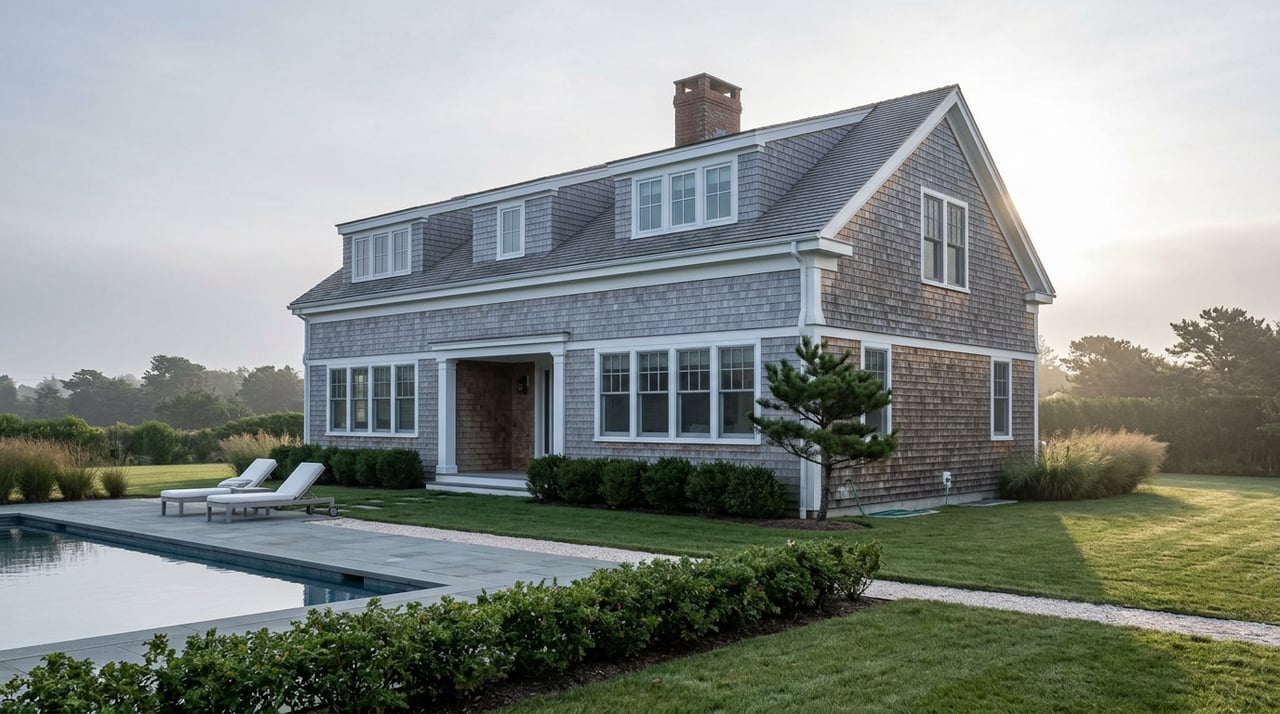
"I've known betterments are on the table for a very long time," a Nantucket Select Board member named Mohr said in October 2025, discussing a road project whose first phase alone was estimated at $24 million, with the full two-phase project reaching $37 million and expected to be funded at least in part by assessments charged to the homeowners who benefit from it. The road in question was Baxter Road, on the opposite side of the island from Madaket. But the mechanism behind that number, a town betterment assessment billed directly to the owners who benefit from a road, is not unique to one street. It is baked into how Nantucket pays for the roads it does not already own, and it shows up in a much smaller, much quieter way on the sand and shell lanes that branch off Madaket Road, on the island's western end.
If you are comparing Madaket to other parts of the island on price per square foot alone, you are missing a line item that never appears in the listing.
The Road Most Buyers Never Ask About
Plenty of streets off Madaket Road are private. Not private in the sense of a gate or a keypad, but private in the legal sense: the town does not plow them, does not grade them, and does not pay to fix them when a nor'easter washes out the shoulder. That responsibility sits with whoever owns the land the road crosses, usually the abutting property owners, sometimes organized into a formal association and sometimes not.
This is not a Madaket quirk. It is how a large share of Nantucket's road network has worked since long before zoning existed, when roads were laid out to serve grazing commons rather than subdivisions. What makes it relevant to a buyer today is that the obligation transfers at closing whether or not anyone mentions it. You inherit the road the same way you inherit the septic system or the well, except the road rarely comes up in a home inspection.
One Association, Three Old Names
For decades, Madaket residents handled this through a patchwork of small groups. The Madaket Residents Association collected dues, historically $50 a year, and put some of that money toward local concerns. A separate group, the Tristram's Long Pond Association, looked after issues specific to that pond and its surrounding lots. Both eventually folded into the Madaket Conservation Association, which traces its own history back to 1958, when a group of residents and homeowners first organized to protect the character of the area.
The Madaket Conservation Association describes its purpose as working to "foster the preservation and improvement of the beaches, dunes, roads and waterways in the Madaket area." Roads sit right alongside beaches and waterways in that sentence, not as an afterthought but as a core piece of what the organization exists to manage. That merger matters for a buyer because it means the entity you would actually contact to understand a specific street's road situation may not be the name on an old deed or an outdated homeowners association reference from a title search. It is worth confirming which group, if any, is currently active for the specific road a property sits on, because the answer changes what you can expect to pay and when.
Who Actually Pays, Road by Road
The gap between a town-accepted road and an unaccepted private lane is not cosmetic. It shows up in real dollars, and it shows up differently depending on whether an active association exists.
| Road status | Plowing and grading | Pothole and drainage repair | Risk of a lump-sum assessment | How visible at closing |
|---|---|---|---|---|
| Town-accepted road | Town-funded | Town-funded | Low | Fully disclosed, no action needed |
| Private road, active association | Shared dues, often modest annual fee | Shared dues, sometimes a special assessment | Moderate, tied to association votes | Requires asking for dues history and bylaws |
| Private road, no functioning association | Owner's own arrangement or informal cost-sharing | Owner's own cost, unpredictable | Higher, especially if the town later steps in | Rarely disclosed unless specifically requested |
The last row is the one that catches buyers off guard. When a private road has no functioning association and falls into serious disrepair, the town can step in under its own authority, and that is where the betterment mechanism enters the picture.
The Mechanism That Turns a Dirt Road Into a Tax Bill
Nantucket's bylaws include a specific process for this. Under Article VIII of Chapter 127, the Select Board can authorize permanent repairs on a private way once it determines the work is required by public convenience and necessity. Once that determination is made, the town does not simply absorb the cost. The expense of the repair, plus whatever the town borrowed to pay for it, gets apportioned to the benefited property owners as a betterment. Owners can pay the full amount in cash within 30 days, or the town can bill it out over a period the Board of Assessors sets, up to but not including 20 years, with interest set at least two percentage points above whatever rate the town itself is paying to borrow.
That structure is not a hypothetical clause nobody has used. The Baxter Road discussion, reported in October 2025, shows Select Board members actively debating how to present a betterments plan to Town Meeting at a scale large enough that losing the vote was a real concern. Madaket's version of this exposure tends to run much smaller in dollar terms than a bluff-stabilization project, since most of its private roads are simple grade and drainage work rather than multi-phase engineering. But the legal lever is the same one, and the direction of the cost is the same: from the town's general fund toward the specific owners whose road benefited.
The Roads and Right-of-Way Committee, which has operated since 2009, reviews these questions across the island and makes recommendations to the Select Board on both public and private access. Its existence is itself a signal that private road status is treated as an ongoing policy question on Nantucket, not a settled fact you can assume away.
What to Ask Before You Write an Offer
A few questions, asked early, tell you almost everything you need to know about what a specific Madaket address will actually cost you to maintain.
- Is the road serving this property town-accepted or private, according to the title search and the assessor's map
- If private, is there a functioning road association currently collecting dues, and what have those dues actually been over the last several years
- Are there any association meeting minutes or newsletters that mention planned regrading, drainage work, or a special assessment
- Has the town's Select Board or the Roads and Right-of-Way Committee discussed this road, or any road it connects to, in recent meeting agendas
- Does the seller have record of any past betterment notice tied to this address
None of these questions require a lawyer to ask, though a real estate attorney should confirm the answers before closing. Most of them can be resolved with a phone call to the Madaket Conservation Association and a look at recent Select Board agendas, both public and both free.
What This Actually Means for What You're Buying
A median sale price in Madaket tells you what buyers paid for the house. It does not tell you what two nearly identical houses on two different streets will cost their owners every year afterward, because that number depends entirely on which road each house sits on and how well organized the neighbors on that road happen to be. One street with an active, well-funded association might mean predictable dues and a plowed lane all winter. Another, with no association at all, might mean nothing gets fixed until it gets bad enough for the town to step in, at which point the bill arrives with the town's interest rate attached and a repayment schedule that can stretch two decades.
This is not a reason to avoid Madaket. It is a reason to treat the road the same way you would treat the septic system or the roof: as a specific, inspectable, askable thing, rather than an assumption that comes bundled with the price of the house.
FAQ
Does a private road affect my mortgage or homeowners insurance? Lenders and insurers generally care whether the property has legal, adequate access, not whether that access is publicly or privately owned. Ask your lender directly, since requirements can vary by loan type.
Is this specific to Madaket, or true elsewhere on Nantucket? The underlying bylaw applies island-wide. Madaket simply has a high concentration of private roads relative to other neighborhoods, which makes the question more likely to come up there than in, say, a downtown Nantucket purchase.
Where would I actually find a road's current status before making an offer? Start with the title search your closing attorney orders, then cross-check with the Madaket Conservation Association and the town's published Select Board and Roads and Right-of-Way Committee agendas, both public records.
Buying in Madaket rewards the kind of buyer who asks about the road before asking about the view. If you want a second set of eyes on what a specific address's road situation actually looks like, or you are ready to compare a few west-end properties side by side, Sanford & Sanford Real Estate can walk the specifics with you before you write an offer, not after.